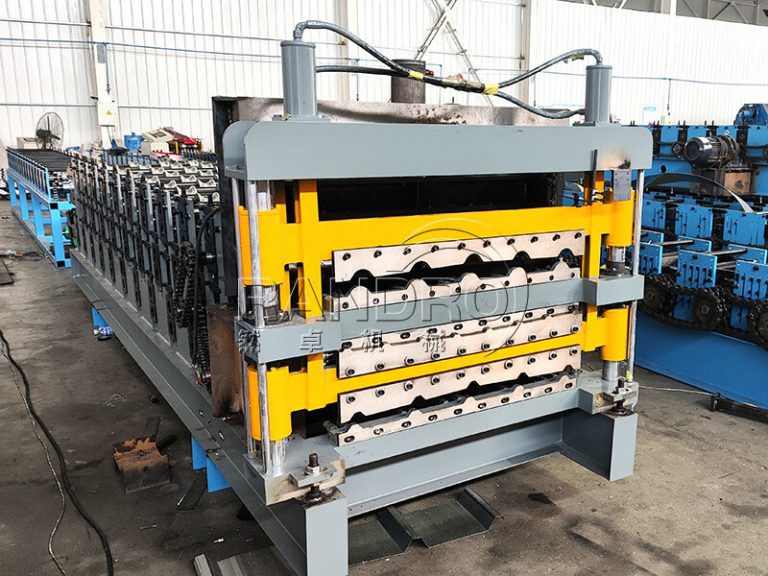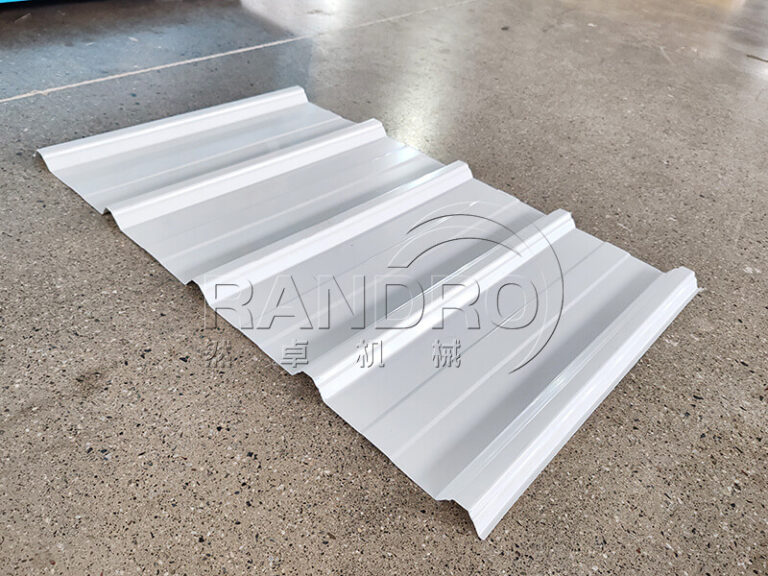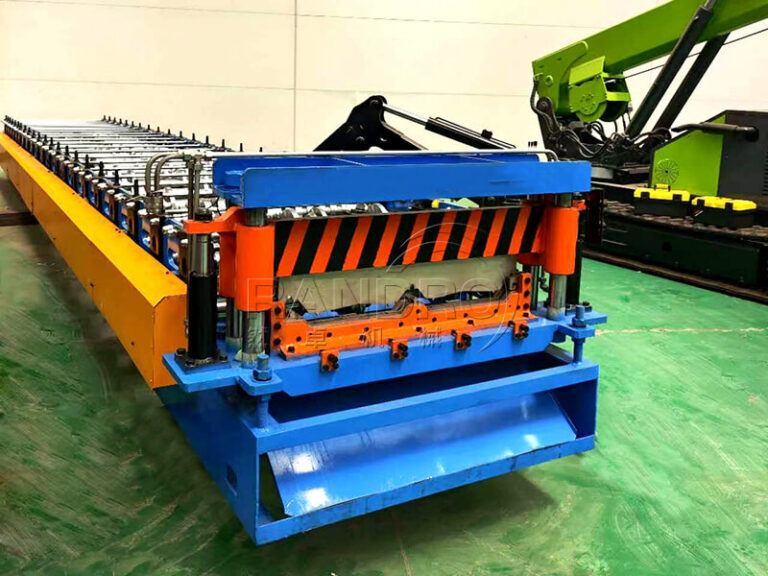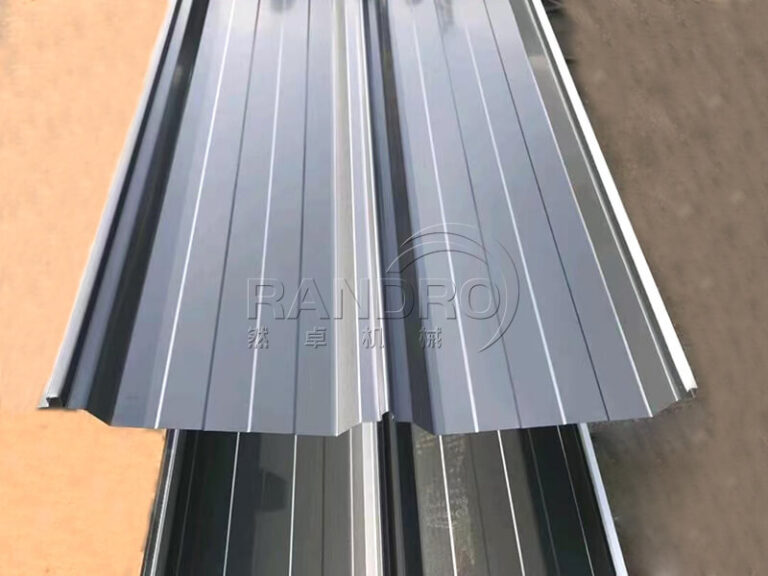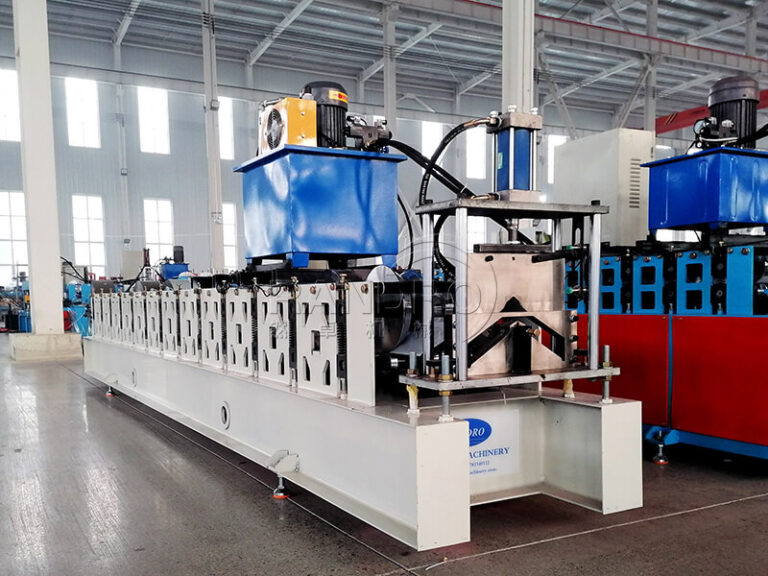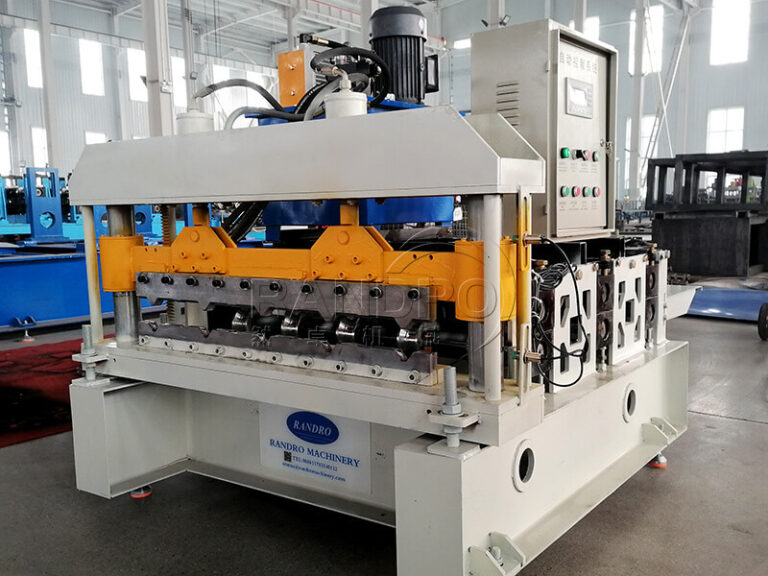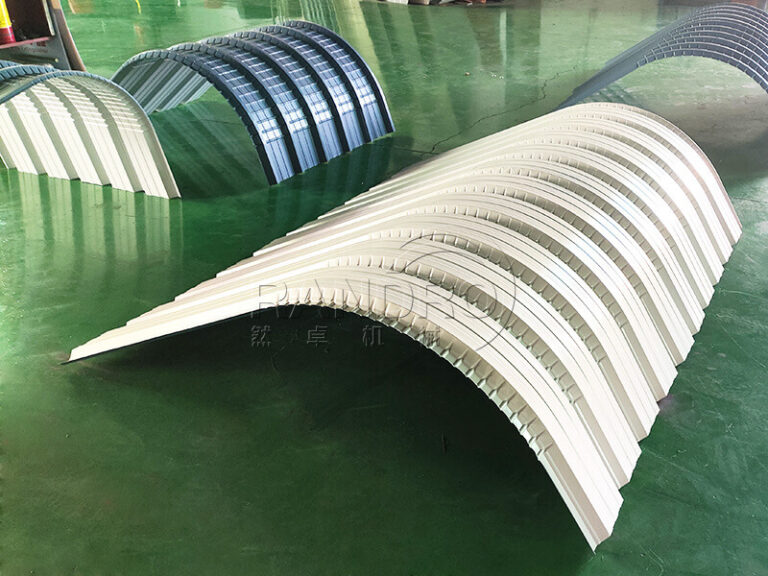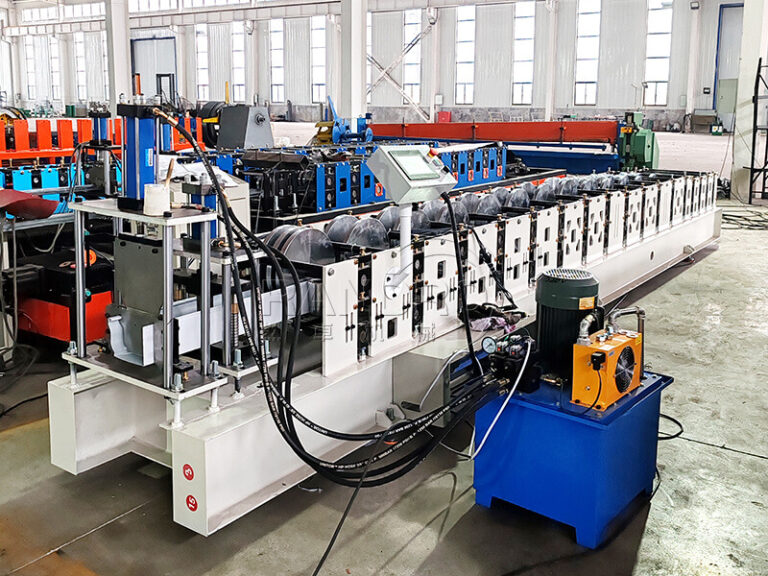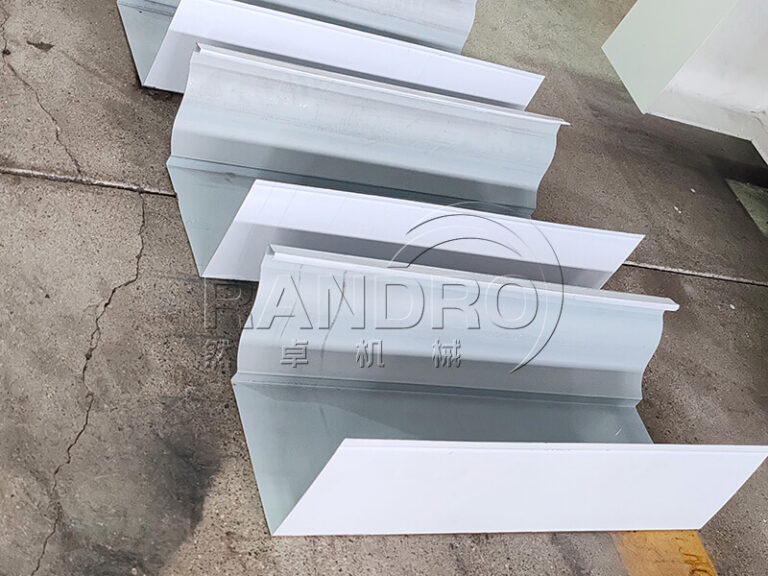
If you run a semi-automatic cable tray roll forming line, you’ve likely wrestled with this question: Is spending an extra $40k on full automation a smart investment, or just an expensive luxury?
Automation for metal roll forming isn’t new anymore. The real question is straightforward: will this added capital cost become a burden on your balance sheet, or will it turn into recoverable profit within just a few years?
A fully automatic cable tray production line typically runs $30,000 to $50,000 higher than a comparable semi-automatic model. For many metal fabricators, that price gap pays itself back in 12 to 24 months. For others, the return never materializes. Everything boils down to four core factors: how often you switch tray widths, your reliance on skilled operators, precision tolerance requirements, and your order mix.
This article skips over glossy marketing brochures. We’ll break down real production data and practical cost models so you can make a grounded buying decision.
Why Cable Tray Manufacturers Are Re-evaluating Automation in 2026
The biggest shift in cable tray fabrication over the last five years isn’t machine hardware — it’s the shrinking pool of experienced roll forming operators.
A semi-automatic line usually requires two or three operators on duty every shift. Every time you need to switch to a new tray width, you need a seasoned technician to loosen roll clusters, remove and re-stack spacers, lock everything back into place, re-align tooling, run test pieces, and fine-tune settings until the finished parts meet specs.
Hiring and retaining workers with this hands-on expertise is getting harder and pricier by the season.
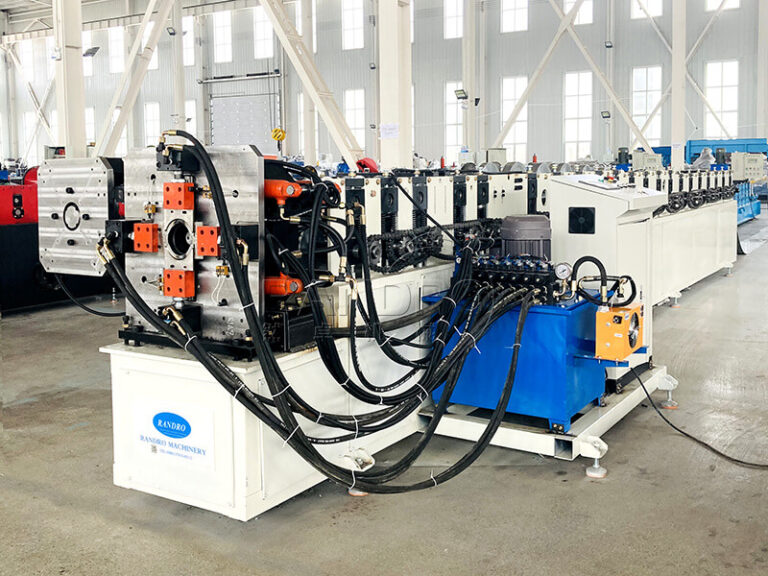
A fully automatic cable tray cold roll forming machine embeds all that hands-on know-how into the PLC. Width settings, punch locations, feed lengths and cutting sequences are saved as stored recipes. An operator with only three days of training can switch production from 200mm to 400mm — no manual adjustment of roll spacers required.
Labor pressure isn’t the only driver. Order demands have changed dramatically. Data center builds, solar farms and energy storage projects have fragmented cable tray orders. One fabrication shop may receive requests for 100mm, 200mm, 300mm, 400mm and 600mm widths all within the same week.
Where changeovers used to happen a couple times weekly, many manufacturers now reconfigure their lines once or twice per day. Manual changeovers take 2–4 hours each time. A servo-controlled, 100–600mm adjustable cable tray roll forming machine cuts that process down to under ten minutes.
Over a full year, that saved time isn’t just a minor efficiency boost. It’s equivalent to gaining 80–90 extra full production shifts — without buying a second production line.
Fully Automatic vs Semi-Automatic Lines: The Practical Differences
Changeover time: lost production shifts vs near-instant switch
This is the most overlooked cost point in cable tray manufacturing.
On semi-automatic equipment, switching tray widths is entirely manual physical work. Roll sets are loosened, spacers repositioned, locking points retightened. The first several meters produced become scrap while operators dial in dimensions. Two to four hours per change is standard; complex profiles can eat up half a shift.
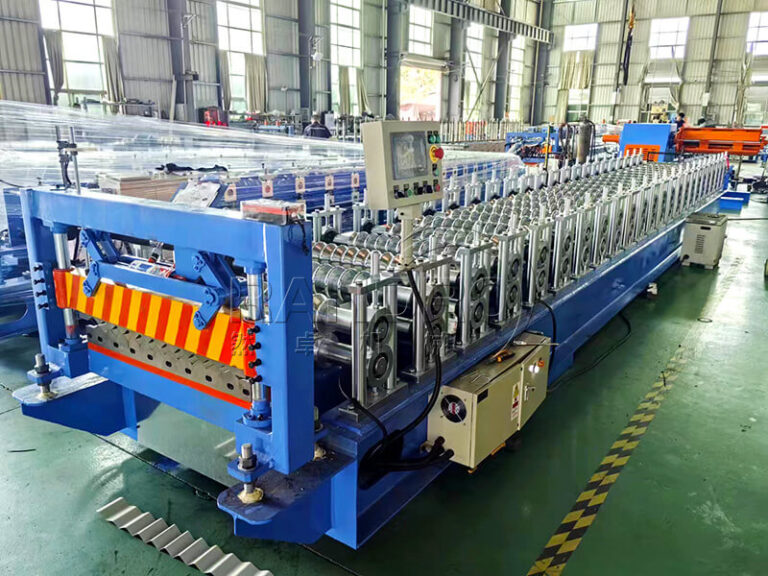
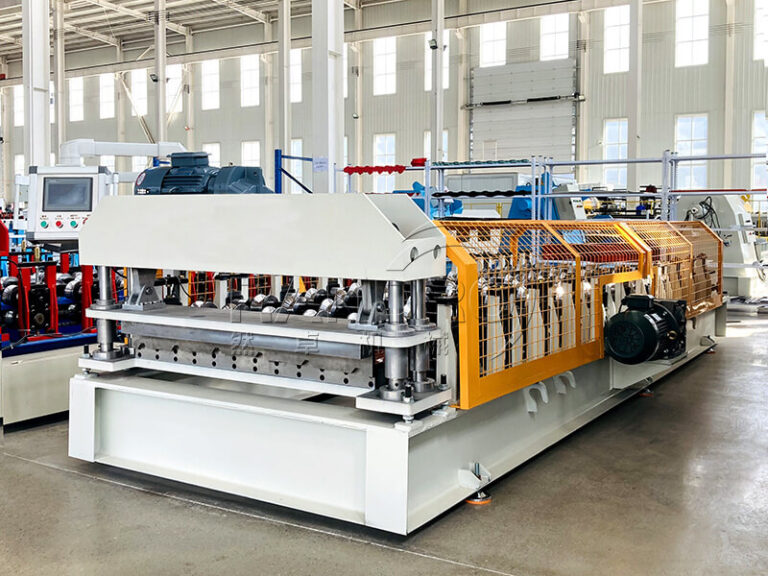
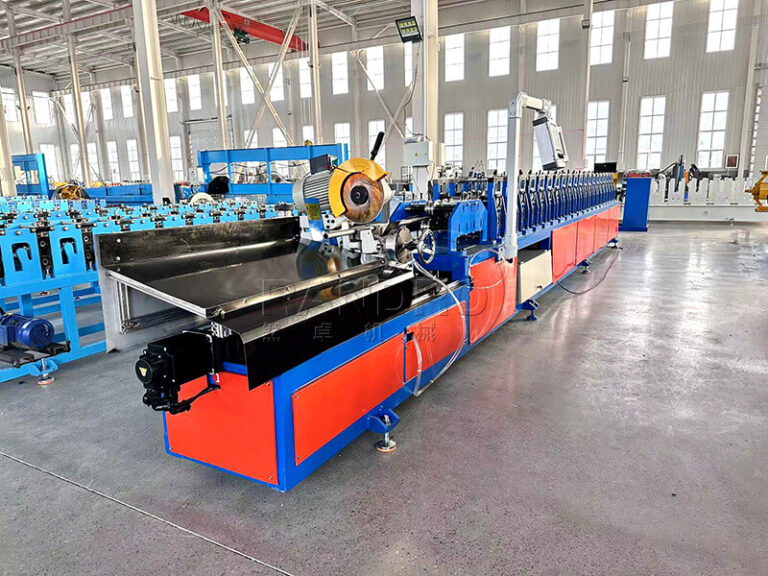
On a fully automatic cable tray roll forming machine, width changes happen via software. The operator inputs the target width on the HMI. Servo motors reposition all forming stands automatically, while punching and cutting programs update instantly. A galvanized steel cable tray making machine built this way can complete a width change in 5–10 minutes, including a short test run to verify quality.
Let’s turn that into real output numbers. If you reconfigure once per day and each manual change takes three hours, across 250 working days you lose 750 hours annually just to changeover downtime. That equals roughly 94 full production shifts wasted. Cutting changeover time to ten minutes recovers nearly 85 of those shifts every year.
Precision: operator intuition vs consistent digital control
Semi-automatic lines live or die by the operator’s experience and focus. A seasoned technician can maintain tight tolerances, but new hires struggle to keep consistent quality.
Fully automatic systems manage feed length, punch placement and forming speed through servo drives and PLC logic. Critical dimensions stay within ±0.5mm, shift after shift, no matter who is at the control panel.
For manufacturers supplying data centers and premium commercial projects, this isn’t a nice bonus. Many project specifications explicitly require tray length tolerance within ±0.5mm. Semi-automatic lines hit this target only with constant inspection and manual tweaks. Fully automatic lines deliver this precision by design.
Labor risk: irreplaceable specialists vs easily trained staff
Semi-automatic production locks all critical know-how into one or two key team members. If they leave, their replacement may take weeks or months to match the same output and quality standard.
With a fully automatic line, process recipes are stored in the control system. The machine keeps all settings intact, even when operators turnover.
For plant managers, this reduces operational risk at a fundamental level — it’s not just about cutting labor costs.
ROI Calculation: Three Real-World Production Scenarios
Scenario A: 300 meters/day — semi-automatic still makes sense
At this production volume, factories typically run one or two machines with 5–10 staff, mostly fulfilling local jobs with stable product specs. Changeovers are rare. The labor cost of manual reconfiguration stays manageable.
Unless you’re losing orders because you cannot handle varied specs and tight lead times, the $40k automation premium is hard to justify.
Scenario B: 800 meters/day — automation’s sweet spot
This is where the financial math starts working in your favor. Product variety grows, changeovers become frequent, and skilled labor accounts for a larger share of total costs.
Using our changeover model: one switch per day, saving 2.5 hours each time, that adds up to roughly 600 extra production hours per year. At a moderate line speed of 10 m/min and 70% utilization rate, you can produce an extra 250,000 meters of cable tray annually.
Against that $40k price difference, manufacturers at this throughput level often see payback within 12–18 months. After that, the savings keep accumulating year after year.
Scenario C: 2,000 meters/day — automation is mandatory infrastructure
At this scale, downtime and labor costs multiply alongside your output. A three-hour line stop disrupts your entire production schedule. Servo flying shears, continuous punching and automatic width adjustment are no longer optional upgrades. They become baseline requirements to compete on delivery lead time and unit cost.
When Semi-Automatic Remains the Right Choice
Fixed, limited product range
If your shop only manufactures two or three standard widths year-round and rarely switches profiles, manual changeover won’t bottleneck your operation. The automation premium will take much longer to recoup, and the simpler mechanics of semi-automatic equipment may fit your needs better.
Cash flow constraints in early-stage operations
For newer fabricators, that $40k price gap can decide whether your line starts production this quarter or gets pushed to next year. Many operators start with a semi-automatic line to build order volume and stabilize cash flow before upgrading.
One critical rule: pick a machine that supports future retrofits. Plan your upgrade roadmap before your order mix becomes too complex for manual changeovers.
Low, stable local labor costs
In markets where skilled roll forming technicians are abundant and wages stay low, the labor disadvantage of manual changeovers shrinks. Your ROI calculation shifts, and the automation upgrade may not hit your target return rate.
FAQ: Key Questions When Comparing Fully Automatic and Semi-Automatic Lines
How long does it take to recoup the automation premium? With daily changeovers and skilled operator wages of $800–$1,200 per month, payback commonly lands between 12 and 24 months. Shops changing widths multiple times a day or operating in high-wage regions break even faster. Factories running consistent, single-spec production may never hit positive ROI.
Can I upgrade a semi-automatic line to full automation later? Partial retrofits are technically possible, but rarely economical. Adding PLC servo width adjustment, flying shears and automated punch positioning can cost 50–60% of a brand-new fully automatic machine. Your line also sits idle during the upgrade work. For most manufacturers, buying automation upfront delivers better value.
Does a fully automatic machine need less skilled labor? For day-to-day running, yes. Recipes are saved on the HMI and changeovers are software-driven. You still need at least one team member with basic electrical and maintenance skills to handle sensor alerts, servo fault resets and routine lubrication. This role does not require a veteran roll forming technician, but proper training is still required.
What if I need to produce widths wider than 600mm? Confirm the supplier’s specification range before quoting jobs. Most standard automatic lines top out at 600mm. Wider profiles such as 800mm or 1,000mm usually need custom forming stands and extra servo axes. This raises machine pricing and can extend changeover times for your widest profiles.
Will automatic width adjustment hurt forming quality at the minimum or maximum width? A well-engineered automatic line maintains consistent roll gap and forming pressure across its full adjustable range. The deciding factor is whether forming stands are originally designed for that full width range, or just modified from a smaller base model. Always ask suppliers for sample profiles at both minimum and maximum widths, and check flange angle and web flatness at both extremes.
Five Questions to Answer Before Requesting a Quote
Before reaching out to equipment suppliers, work through these five questions internally:
- Changeover frequency: Over the past six months, how many line reconfigurations do you run per day or per week?
- Operator dependency: If your most experienced technician left tomorrow, how long would production and quality return to normal?
- Precision issues: Have you lost orders or paid penalties in the last year due to tolerance errors on length or angle?
- Order trends: Are customers asking for more profile variations and shorter lead times?
- Cash flow check: If you financed the $40k automation premium over 12 months, can gross margins from your current orders cover the repayments?
If your answers are:
- One changeover per day or more
- Recovery would take over two weeks, or you’re unsure
- Customers keep requesting more product variants and faster delivery
Your operation is already in the zone where a fully automatic cable tray production line makes economic sense. The question is no longer if you should upgrade, but how to structure your purchase so the savings start from day one.
Call to Action
Pull your production logs from the last six months, tally up actual changeover downtime and scrap rates. Share those figures with your roll forming machine supplier and request a custom ROI simulation built around your shop’s unique order mix. With real operational data in hand, you will know for certain whether that $40k investment will move your fabrication business forward.